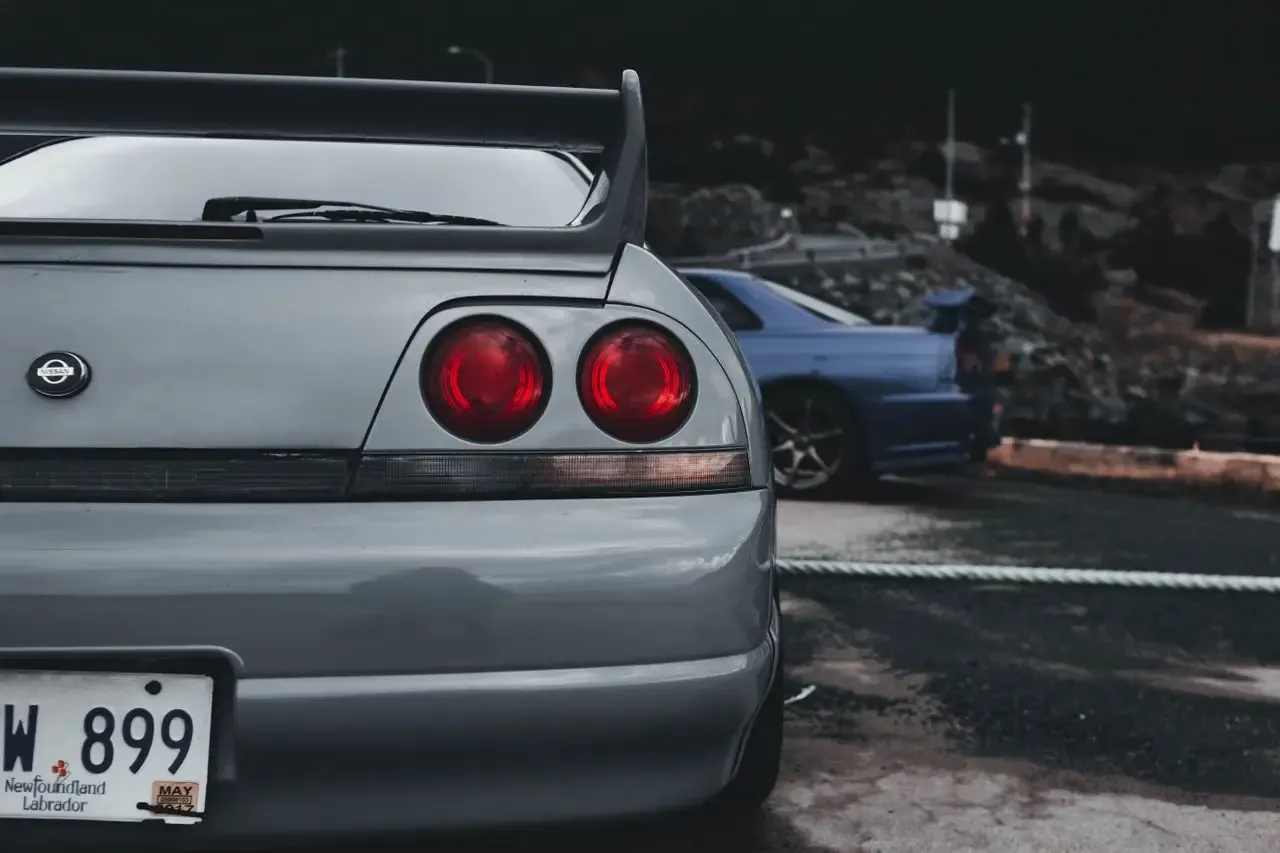
There is a particular sound an RB26 makes just past four thousand revs, when the second turbo joins the conversation and the intake note hardens from a hum into something with teeth. Thirty years on, it remains the most convincing argument Nissan ever made.
The engine was never the most powerful thing in its class. On paper it produced 280 PS, a figure that was less an engineering outcome than a diplomatic one — the result of an industry agreement among Japanese manufacturers to stop advertising anything higher. Everyone knew the number was fiction. Dyno figures from untouched cars routinely landed north of 320 PS, and Nissan’s own motorsport department was extracting more than double that before the R32 had finished its first season.
Built for a rulebook, not a road
What makes the RB26 unusual is that it was designed backwards from a regulation. Group A homologation required a production engine of a specific capacity, so Nissan built 2.6 litres — an odd size that existed for no reason other than to place the car in the right class once the turbocharger multiplier was applied.
Everything else followed from that constraint. Six individual throttle bodies, one per cylinder, because response mattered more than refinement. An iron block that was comically overbuilt for 280 PS, because the race version would need to survive twice that under sustained load. Oil galleries and a sump designed for a car that would spend its life at full noise.
It is an engine that was never really meant for the road, sold to people who would spend the next three decades finding that out.
The result is a road engine carrying a racing engine’s structural margins. That margin is precisely why the RB26 became the tuner’s default. You could ask it for 500 horsepower with bolt-ons and a rebuild, and it would simply agree.
The myth and the maintenance
The reputation has outrun the reality in places. RB26s are not indestructible. The ceramic turbine wheels in the standard turbos are fragile and will grenade if boost creeps. Oil starvation on sustained left-hand load is a well-documented weakness that ended a great many engines before the aftermarket sorted the sump baffling. Number six cylinder runs hot, always has, and the standard cooling layout does it no favours.
None of this dented the legend, partly because the fixes are known and cheap relative to the payoff, and partly because the engine’s character survives all of it. An RB26 with a decent tune and a healthy set of turbos does something modern turbocharged sixes have engineered out: it makes you wait, then rewards the waiting.
Why it still matters
Because it was the last of its kind, more or less. The RB26 belongs to a narrow window when Japanese manufacturers were building homologation specials with no real commercial logic, aimed at a racing series most of their customers would never watch.
That window closed. What replaced it is faster, more reliable, and considerably less interesting to talk about at eleven at night in a car park.